Understanding how much you sweat is key to staying hydrated and performing your best, whether you’re an athlete or just enjoy being active. This guide, “How to Determine Your Sweat Rate for Better Hydration,” dives into the science behind sweat, explaining why it matters and how it impacts your body. You’ll discover practical methods to measure your individual sweat rate and learn how to use this information to create a personalized hydration plan that keeps you feeling great.
From the impact of dehydration on your performance to the nuances of environmental factors and individual differences, we’ll cover everything you need to know. We’ll explore easy-to-follow methods like the weighing method and the collection method, equipping you with the knowledge to accurately determine your sweat loss. This information will allow you to optimize your fluid and electrolyte intake, ensuring you stay ahead of dehydration during any activity.
Understanding Sweat Rate and Hydration Needs
Knowing your sweat rate is a critical aspect of optimizing athletic performance and maintaining overall health. It’s the key to personalized hydration, ensuring you replace the fluids you lose during physical activity. This proactive approach helps prevent dehydration, which can significantly impair both your physical capabilities and cognitive function. By understanding your individual sweat rate, you can create a hydration strategy tailored to your specific needs, leading to improved endurance, faster recovery, and a reduced risk of heat-related illnesses.
Significance of Sweat Rate for Performance and Health
Understanding your sweat rate is vital for peak performance and overall well-being. It allows athletes and active individuals to maintain optimal hydration levels, which directly impacts their physical and cognitive functions. Dehydration can lead to fatigue, reduced endurance, and impaired decision-making, all of which can hinder performance. Conversely, proper hydration supports efficient muscle function, regulates body temperature, and aids in nutrient transport, contributing to faster recovery and overall health.
Impact of Dehydration on the Body
Dehydration has a significant detrimental impact on the body, affecting both physical and cognitive functions. Even mild dehydration can lead to a cascade of negative effects, progressively worsening with increased fluid loss.
- Physical Effects: Dehydration reduces blood volume, making it harder for the heart to pump blood, increasing heart rate, and causing fatigue. Muscle cramps, decreased power output, and impaired coordination are also common. Body temperature regulation is compromised, increasing the risk of heat exhaustion and heatstroke.
- Cognitive Effects: Dehydration impairs cognitive function, leading to difficulty concentrating, reduced alertness, and slower reaction times. Decision-making abilities are also affected, increasing the risk of errors and accidents. Mood changes, such as irritability and anxiety, can also occur.
Influence of Activity Intensity on Sweat Production
The intensity of physical activity directly influences sweat production. Higher-intensity activities, which demand greater metabolic output, generate more heat, leading to increased sweating to regulate body temperature. The environment also plays a role, with hotter and more humid conditions accelerating sweat loss.
- Low-Intensity Activities: Activities like leisurely walking or light yoga typically result in lower sweat rates. The body’s need for cooling is less, so fluid loss is moderate.
- Moderate-Intensity Activities: Activities like jogging, cycling at a moderate pace, or brisk hiking increase sweat production. The body works harder, generating more heat and requiring more efficient cooling.
- High-Intensity Activities: Activities such as sprinting, interval training, or competitive sports like soccer or basketball lead to significantly higher sweat rates. The body produces a large amount of heat, necessitating substantial fluid loss to maintain core temperature.
For example, a marathon runner can lose several liters of sweat during a race, while a person doing yoga in an air-conditioned room might lose a minimal amount.
Methods for Measuring Sweat Rate
![Sweat Rate Calculator [Interactive Tool] and Quick Guide](https://www.healthspanelite.co.uk/Images/Article/small/Elite-Hydration-how-to-calculate-your-sweat-rate-1920x640px.jpg "Sweat Rate Calculator [Interactive Tool] and Quick Guide")
Understanding your sweat rate is crucial for optimizing hydration strategies. Knowing how much fluid you lose during exercise allows you to replace it effectively, preventing dehydration and maximizing performance. Several methods can be used to determine your sweat rate, each with its own advantages and disadvantages. This section focuses on one of the most practical and accessible methods: the weighing method.
The Weighing Method
The weighing method provides a straightforward way to measure sweat loss during exercise. It involves weighing yourself before and after exercise, accounting for any fluid consumed during the activity. This method is relatively simple, requires minimal equipment, and can be performed in various settings.To effectively use the weighing method, follow these steps:
- Pre-Exercise Weigh-In: Before starting your workout, remove all clothing (or wear the same minimal clothing you’ll wear during exercise) and weigh yourself using a reliable scale. Record this weight accurately.
- Exercise Session: Perform your planned exercise session under typical conditions (temperature, humidity, intensity). This ensures the sweat rate measurement is relevant to your usual training.
- Fluid Intake Tracking: Carefully measure and record the amount of fluid you consume during exercise. Use a graduated bottle or container to track your intake accurately.
- Post-Exercise Weigh-In: Immediately after exercise, remove any clothing and weigh yourself again using the same scale. Record this post-exercise weight.
- Data Analysis: Calculate your sweat loss using the following formula:
Sweat Loss = (Pre-exercise Weight – Post-exercise Weight) + Fluid Intake
The difference in weight represents fluid loss, and adding fluid intake gives the total sweat loss. This total sweat loss can then be divided by the exercise duration to determine your sweat rate (e.g., liters per hour).
Here’s a step-by-step guide for recording data during the weighing method, including specific time intervals:
- Pre-Exercise: Record your initial weight before the exercise session. Note the time and date.
- During Exercise: Record fluid intake at regular intervals (e.g., every 15-30 minutes). Note the time, amount of fluid consumed, and any other relevant observations.
- Post-Exercise: Immediately after exercise, record your final weight. Note the time and duration of the exercise.
- Calculation: Use the recorded data and the formula above to calculate your sweat loss and sweat rate.
A sample data recording sheet can be structured as follows:
This table provides a clear and organized way to track the necessary data for the weighing method. It includes columns for time, pre-exercise weight, post-exercise weight, fluid intake, and sweat loss, facilitating easy calculation of your sweat rate. The “Sweat Loss” column is calculated using the formula mentioned earlier.
| Time | Pre-Exercise Weight (kg) | Post-Exercise Weight (kg) | Fluid Intake (mL) | Sweat Loss (mL) |
|---|---|---|---|---|
| 0:00 (Before Exercise) | 70.0 | N/A | 0 | N/A |
| 0:30 | N/A | 69.5 | 500 | 1000 |
| 1:00 | N/A | N/A | 250 | |
| 1:30 (After Exercise) |
Example: Let’s say a runner weighs 70 kg before a one-hour run. After the run, they weigh 69.5 kg, and they consumed 500 mL of fluid. Their sweat loss calculation would be: (70 kg – 69.5 kg) + 0.5 L = 1 L. Therefore, their sweat rate is 1 L/hour.
Methods for Measuring Sweat Rate
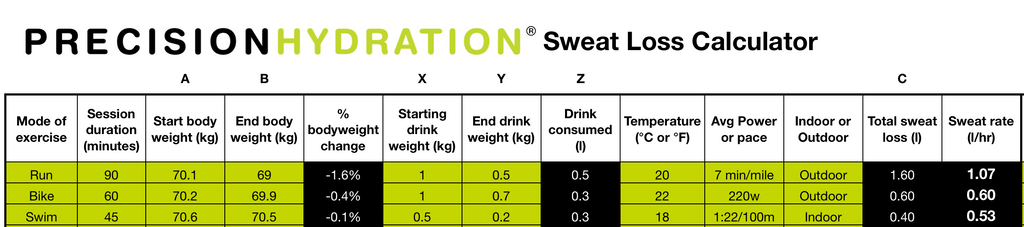
Understanding your sweat rate is crucial for effective hydration strategies, allowing you to replace fluids lost during exercise and maintain optimal performance. Several methods exist for determining your sweat rate, each with its own advantages and disadvantages. Choosing the right method depends on your resources, the type of exercise, and the level of accuracy you require.
The Collection Method
The collection method provides a direct way to measure sweat loss during exercise. This involves collecting and weighing the sweat produced over a specific period. It is a practical method, especially when access to more sophisticated equipment is limited.To perform the collection method, you will need the following materials:
- Sweat Collection Patches or Absorbent Materials: These are the primary tools for capturing sweat. Commercially available sweat collection patches are designed to adhere to the skin and absorb sweat directly. Alternatively, you can use absorbent materials such as gauze pads or clean, dry towels.
- Scale: A precise scale is essential for measuring weight changes. A digital scale with an accuracy of at least 0.1 grams is recommended.
- Pre-exercise Weight Measurement: A scale is also needed to measure your weight before the exercise.
- Post-exercise Weight Measurement: You will need to weigh yourself again after the exercise.
- Water Bottle or Fluid Container: To measure the volume of fluids consumed during exercise.
- Timer: To accurately track the duration of the exercise session.
Here’s how to correctly apply sweat collection patches or absorbent materials to capture sweat during exercise:
- Prepare the Skin: Clean and dry the skin area where you plan to apply the patches or absorbent material. This helps ensure good adhesion and accurate sweat collection.
- Apply Sweat Collection Patches: If using patches, carefully peel off the backing and apply them to the chosen skin area, such as the forearm, chest, or back. Ensure the patch adheres firmly to the skin.
- Use Absorbent Materials: If using absorbent materials, place the gauze pads or towel in areas where sweat is likely to accumulate. Consider securing them with tape or clothing to prevent them from moving during exercise.
- Start Exercising: Begin your exercise session, noting the time.
- Monitor and Replace: If using absorbent materials, check them periodically and replace them with fresh ones when they become saturated. If using patches, monitor them for saturation and replace as needed, depending on the exercise intensity and duration.
- Measure Sweat Collected: After the exercise, carefully remove the patches or absorbent materials. If using patches, weigh the patches to determine the weight of sweat absorbed. If using absorbent materials, weigh the saturated material and subtract the weight of the dry material to calculate the sweat weight.
- Measure Fluid Intake: Measure the volume of any fluids consumed during the exercise session.
- Calculate Sweat Rate: Use the formula to calculate your sweat rate:
Sweat Rate (L/hr) = [(Pre-exercise weight – Post-exercise weight) + Fluid intake] / Exercise duration (hours)
Potential challenges and limitations of the collection method include:
- Patch Adhesion: Sweat collection patches may not adhere well to the skin, especially in areas with high movement or during intense sweating. This can lead to inaccurate sweat collection.
- Inaccurate Sweat Capture: Sweat may not be fully captured by the patches or absorbent materials, leading to an underestimation of sweat loss.
- Skin Irritation: Some individuals may experience skin irritation or allergic reactions to the adhesive in the patches.
- Sweat Evaporation: Some sweat may evaporate from the patches or absorbent materials before collection, especially in hot and windy conditions, further affecting the accuracy.
- Limited Body Coverage: The collection method typically measures sweat loss from a limited area of the body, potentially not representing the overall sweat rate.
- Practicality: The process can be time-consuming and cumbersome, particularly during prolonged exercise sessions.
- Fluid Consumption Measurement: Accurately measuring fluid intake during exercise is crucial, but it can be challenging. Spilling or incomplete consumption can impact the results.
Factors Influencing Sweat Rate
Understanding what influences your sweat rate is crucial for optimizing hydration strategies. Several factors, both internal and external, can significantly impact how much you sweat during exercise. Recognizing these influences allows you to personalize your hydration plan for maximum performance and safety.
Environmental Conditions and Sweat Production
Environmental conditions play a substantial role in determining your sweat rate. Your body’s primary method of cooling itself during exercise is through sweat evaporation. The effectiveness of this process is highly dependent on the surrounding environment.
- Temperature: Higher ambient temperatures generally lead to increased sweat production. As the air temperature rises, your body works harder to maintain a stable core temperature, prompting greater sweating to facilitate cooling. For example, exercising in 90°F (32°C) weather will likely cause you to sweat more than exercising in 70°F (21°C) weather.
- Humidity: High humidity levels can severely limit sweat evaporation. When the air is already saturated with water vapor, sweat evaporates more slowly, reducing the cooling effect. Consequently, your body may sweat more in humid conditions to compensate for the decreased evaporative efficiency. This can lead to a higher sweat rate and increased risk of dehydration.
- Wind: Wind can enhance sweat evaporation, which helps cool the body. Strong winds can make you feel cooler, even in hot conditions, as they facilitate the removal of sweat from your skin. However, the cooling effect of wind is less pronounced in humid environments, as the air is already saturated.
Exercise Intensity and Duration’s Impact on Sweat Rates
The intensity and duration of your exercise directly influence your sweat rate. These factors determine the metabolic heat your body produces, and thus, the cooling demand.
- Exercise Intensity: Higher-intensity exercise generates more metabolic heat, which triggers a greater sweat response. When you are working harder, your body needs to dissipate more heat to maintain a safe core temperature. This leads to a higher sweat rate. For example, during a high-intensity interval training (HIIT) session, you would typically sweat more than during a leisurely walk.
- Exercise Duration: As exercise duration increases, so does the potential for increased sweat loss. Prolonged exercise leads to a buildup of metabolic heat, even at a moderate intensity, necessitating sustained sweating to regulate body temperature. Marathon runners, for instance, can lose several liters of sweat during a race.
Individual Factors Influencing Sweat Rate
Individual characteristics significantly influence your sweat rate. These factors contribute to the variability observed in sweat production among different individuals.
- Genetics: Genetic predispositions play a role in sweat gland density and sweat production efficiency. Some people are simply genetically predisposed to sweat more or less than others.
- Fitness Level: Highly trained individuals often have a more efficient sweating mechanism. They tend to sweat earlier and more effectively, allowing them to cool their bodies more efficiently. This adaptation helps them maintain a stable core temperature during exercise.
- Acclimatization: Regular exposure to hot environments leads to acclimatization, a process where your body adapts to the heat. Acclimatized individuals sweat more, start sweating sooner, and their sweat contains less salt (sodium), all of which improve their ability to cool and conserve electrolytes. Acclimatization can occur within 1-2 weeks of consistent exposure to heat.
Practical Application
Understanding your sweat rate is only the first step. The real value lies in using this information to personalize your hydration strategy and optimize performance. This section will guide you through the process of calculating your sweat rate and applying it to create a tailored hydration plan.
Calculating Sweat Rate from Weighing Data
Calculating your sweat rate accurately requires careful data collection. The weighing method is a common approach. Remember to standardize your process for consistent results.To calculate your sweat rate using the weighing method, follow these steps:
- Weigh Yourself Before Exercise: Record your body weight in pounds (lbs) or kilograms (kg) before your workout. This is your pre-exercise weight.
- Weigh Yourself After Exercise: After completing your workout, dry yourself thoroughly and weigh yourself again. Record your post-exercise weight.
- Measure Fluid Intake: Accurately measure the amount of fluid (in ounces or milliliters) you consumed during the exercise.
- Determine Exercise Duration: Note the total duration of your exercise in minutes or hours.
- Apply the Sweat Rate Formula: Use the following formula to calculate your sweat rate:
Sweat Rate = [(Pre-exercise Weight – Post-exercise Weight) + Fluid Intake] / Exercise Duration
Where:
- Sweat Rate: Expressed as ounces per hour (oz/hr) or milliliters per hour (mL/hr).
- Pre-exercise Weight: Body weight before exercise (lbs or kg).
- Post-exercise Weight: Body weight after exercise (lbs or kg).
- Fluid Intake: Amount of fluid consumed during exercise (oz or mL).
- Exercise Duration: Length of exercise (hours).
Example Calculation (using ounces and hours):
Let’s say a runner weighs 150 lbs before a 1-hour run. After the run, they weigh 148 lbs. During the run, they consumed 20 oz of water.
- Weight Loss = 150 lbs – 148 lbs = 2 lbs
- Convert Weight Loss to Ounces: 2 lbs
16 oz/lb = 32 oz
- Sweat Rate = (32 oz + 20 oz) / 1 hour = 52 oz/hr
Therefore, the runner’s sweat rate is 52 oz/hr.
Calculating Sweat Rate from Collection Methods
When using collection methods, the calculation is simpler because you are directly measuring the sweat volume.
- Collect Sweat: Use methods like sweat patches or absorbent clothing to capture sweat during exercise.
- Measure Sweat Volume: Accurately measure the volume of sweat collected, usually in milliliters (mL).
- Determine Exercise Duration: Note the total duration of your exercise in minutes or hours.
- Apply the Sweat Rate Formula: Use the following formula to calculate your sweat rate:
Sweat Rate = Sweat Volume / Exercise Duration
Where:
- Sweat Rate: Expressed as milliliters per hour (mL/hr).
- Sweat Volume: Total volume of sweat collected (mL).
- Exercise Duration: Length of exercise (hours).
Example Calculation (using milliliters and hours):
A cyclist uses a sweat patch during a 2-hour ride. The patch collects 800 mL of sweat.
- Sweat Rate = 800 mL / 2 hours = 400 mL/hr
Therefore, the cyclist’s sweat rate is 400 mL/hr.
Personalizing a Hydration Plan
Once you know your sweat rate, you can create a personalized hydration plan to replace fluids lost during exercise.
Here’s how to use your calculated sweat rate:
- Determine Activity Duration: Estimate the duration of your upcoming activity (e.g., a 3-hour marathon).
- Calculate Fluid Needs: Multiply your sweat rate by the estimated activity duration to determine your total fluid needs.
- Factor in Practical Considerations: Consider the practical aspects of fluid intake during your activity. For example, if you’re running a marathon, you may not be able to consume fluids at your exact sweat rate. You will need to estimate the amount of fluid you can realistically consume.
- Plan Electrolyte Replacement: Determine the electrolyte needs based on sweat sodium concentration, exercise intensity and duration. Consider electrolyte replacement in your hydration plan to maintain electrolyte balance.
- Adjust as Needed: Monitor your body’s response and adjust your hydration plan based on how you feel and your performance.
Example:
A runner with a sweat rate of 52 oz/hr plans to run a 2-hour race. They estimate they can realistically consume 40 oz of fluid per hour during the race.
- Total fluid loss expected: 52 oz/hr
2 hours = 104 oz
- Planned fluid intake: 40 oz/hr
2 hours = 80 oz
- Fluid deficit: 104 oz – 80 oz = 24 oz
In this example, the runner is planning to consume less fluid than they are losing. They may need to consider strategies to increase their fluid intake, or adjust their pace. It is important to be aware of how much fluid is being lost and the effects of dehydration.
Hydration Strategies Based on Sweat Rate
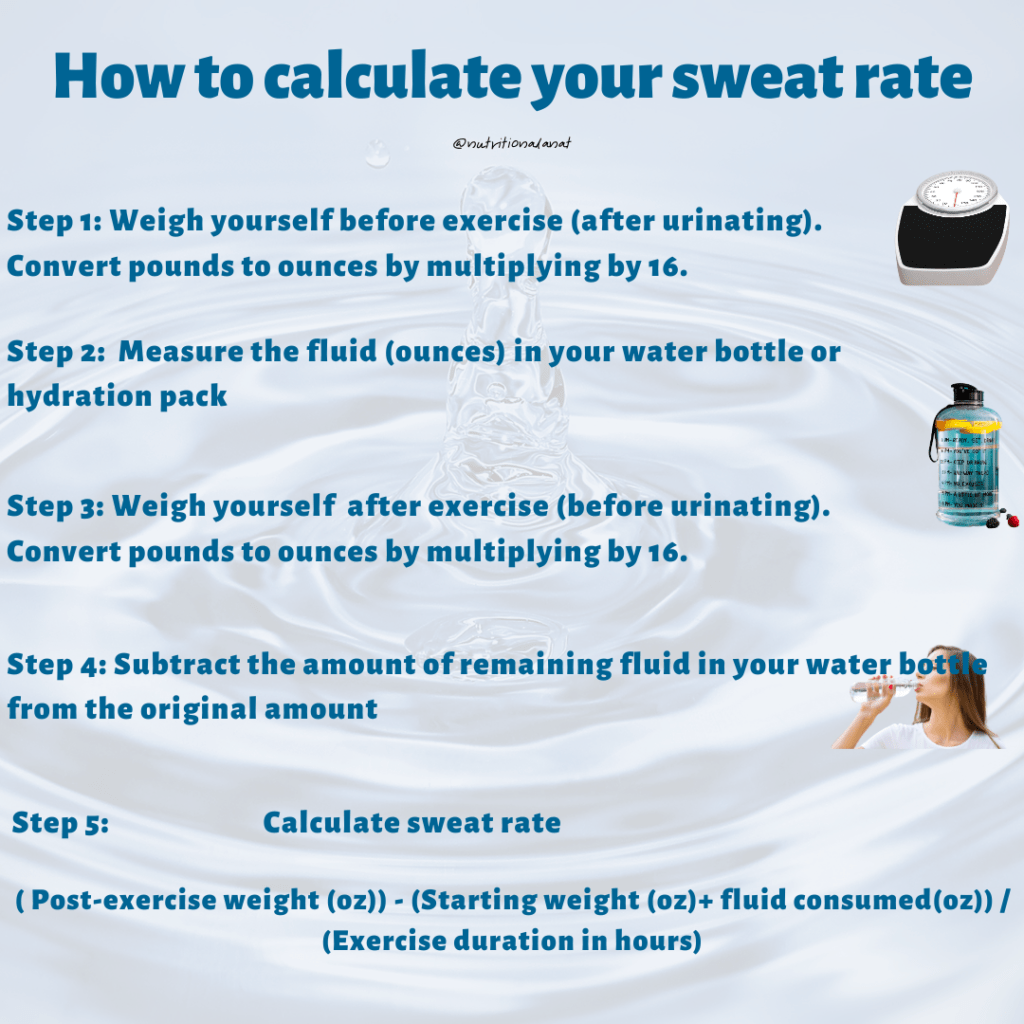
Now that you’ve calculated your sweat rate, it’s time to put that knowledge into action. This section will guide you on how to adjust your fluid intake based on your sweat rate and the duration of your activities, ensuring you stay properly hydrated and perform at your best. We’ll also explore the crucial role of electrolytes and examine various sports drinks to help you make informed choices.
Adjusting Fluid Intake Based on Sweat Rate and Activity Duration
Knowing your sweat rate is the first step; the next is translating that into a practical hydration plan. The goal is to replace the fluids you lose through sweat, preventing dehydration without overhydrating.To create your personalized hydration plan:
1. Determine Activity Duration
Estimate how long your activity will last. This could be a workout, a race, or a hike.
2. Calculate Fluid Loss
Multiply your sweat rate (in ounces per hour) by the estimated activity duration (in hours). This gives you the total fluid you need to replace.
Fluid Loss (oz) = Sweat Rate (oz/hour) x Activity Duration (hours)
3. Adjust for Individual Needs
Consider factors like the intensity of the activity, the weather conditions, and your personal tolerance. If the activity is very intense or the weather is hot and humid, you might need to slightly increase your fluid intake.
4. Plan Your Intake Schedule
Aim to consume fluids consistently throughout the activity, rather than drinking large amounts at once. A good strategy is to start drinking before you feel thirsty. Small, frequent sips are generally better than infrequent, large gulps. For example, if your sweat rate is 32 ounces per hour, and you’re planning a 2-hour run, you would aim to consume approximately 64 ounces of fluid during the run (32 oz/hour x 2 hours = 64 oz).
This can be achieved by sipping on fluids consistently.
The Role of Electrolytes in Hydration
Electrolytes are essential minerals that play a vital role in maintaining fluid balance, muscle function, and nerve transmission. They are lost through sweat, and replacing them is crucial, especially during prolonged exercise. The primary electrolytes lost in sweat are sodium, chloride, potassium, magnesium, and calcium.Here’s why electrolytes are so important:* Fluid Balance: Sodium helps regulate fluid balance in the body.
Muscle Function
Potassium and magnesium are essential for muscle contractions and preventing cramps.
Nerve Function
Electrolytes facilitate nerve impulses.
Performance
Electrolyte imbalances can lead to fatigue, muscle cramps, and decreased performance.
Rehydration
Electrolytes enhance the absorption of fluids in the gut, improving hydration.During activities lasting longer than an hour, or in hot and humid conditions, consider consuming fluids that contain electrolytes to replenish what is lost through sweat.
Sports Drinks and Their Electrolyte Composition
Various sports drinks are available, each with a different electrolyte and sugar content. Choosing the right one depends on your individual needs and the intensity/duration of your activity. Below is a table comparing some popular sports drinks.
Note
Sugar content is expressed as grams per serving.*
| Brand | Electrolytes (per serving) | Sugar Content (per serving) |
|---|---|---|
| Gatorade | Sodium: 160mg, Potassium: 45mg | 21g |
| Powerade | Sodium: 160mg, Potassium: 35mg | 21g |
| Nuun Hydration Tablets (electrolyte only) | Sodium: 300mg, Potassium: 150mg, Magnesium: 25mg, Calcium: 13mg, Chloride: 400mg | 1g |
| Skratch Labs Hydration Mix | Sodium: 380mg, Potassium: 80mg, Magnesium: 8mg, Calcium: 20mg | 19g |
Optimizing Hydration
Beyond simply drinking water during exercise, optimizing hydration involves a holistic approach that considers pre-hydration, post-exercise recovery, and the strategic use of food and beverages to maximize fluid absorption and retention. This section delves into these crucial aspects, offering practical strategies to enhance your hydration efforts and performance.
Pre-Hydration for Exercise Preparation
Pre-hydration is the process of consuming fluids and electrolytes in the hours leading up to exercise. It’s crucial for establishing a state of optimal hydration before you begin your activity, giving your body a head start in managing fluid loss. Proper pre-hydration can improve performance, reduce the risk of heat-related illnesses, and make it easier to maintain hydration throughout your workout.To effectively pre-hydrate, focus on consuming fluids and sodium-rich foods.
This helps increase blood volume and ensures your body has adequate reserves to meet the demands of exercise. Consider these guidelines:
- Timing: Begin pre-hydration 2-4 hours before exercise.
- Fluid Intake: Aim to drink approximately 5-7 ml of fluid per kilogram of body weight. For example, a 70 kg (154 lbs) individual should consume roughly 350-490 ml (12-17 fl oz) of fluid.
- Electrolyte Considerations: Include sodium-rich foods or beverages to help retain fluids. Sodium helps your body hold onto water and promotes fluid absorption.
Foods and Beverages for Pre-Hydration
Several foods and beverages can contribute to effective pre-hydration. The goal is to choose options that are easily absorbed, contain electrolytes, and don’t cause digestive upset. Here are some suggestions:
- Water: The foundation of hydration. Drink plain water throughout the day and especially in the hours leading up to exercise.
- Electrolyte Drinks: Sports drinks containing sodium, potassium, and other electrolytes can be beneficial, particularly for longer or more intense workouts. Choose options with moderate sugar content.
- Coconut Water: A natural source of electrolytes, including potassium.
- Fruits and Vegetables: Many fruits and vegetables have high water content and contain electrolytes. Examples include:
- Watermelon: Approximately 92% water, plus some electrolytes.
- Cucumbers: High in water content.
- Berries: Contain antioxidants and water.
- Salty Snacks: Consume a small amount of salty snacks, such as pretzels or salted nuts, to increase sodium intake and aid in fluid retention.
Post-Exercise Recovery Plan
Post-exercise recovery is a critical phase for replenishing fluids, electrolytes, and glycogen stores. A well-structured recovery plan will help you bounce back faster, reduce muscle soreness, and prepare your body for future workouts. This plan should incorporate both hydration and nutritional considerations.Here’s a framework for a comprehensive post-exercise recovery plan:
- Rehydration: Begin rehydrating immediately after exercise.
- Fluid Intake: Aim to replace 125-150% of the fluid lost during exercise. This is because some fluid is lost through urine.
- Electrolyte Replenishment: Consume foods or beverages containing sodium, potassium, and other electrolytes.
- Carbohydrate Intake: Replenish glycogen stores by consuming carbohydrate-rich foods.
- Protein Intake: Consume protein to aid in muscle repair and recovery.
- Timing: Start recovery within 30-60 minutes post-exercise.
A balanced recovery meal should include carbohydrates, protein, and electrolytes.
Sample Recovery Meal:
- Grilled Chicken Breast: Provides protein for muscle repair.
- Sweet Potato: Offers carbohydrates for glycogen replenishment.
- Spinach Salad with Salted Nuts and Olive Oil: Provides vitamins, minerals, and electrolytes.
- Water or Electrolyte Drink: For rehydration and electrolyte replacement.
Monitoring Hydration Status
Understanding your sweat rate is only part of the hydration puzzle. Regularly monitoring your hydration status ensures you’re effectively replenishing fluids and electrolytes. Several methods exist to assess your hydration levels, allowing you to make informed adjustments to your hydration strategy. These methods provide valuable insights into your body’s fluid balance, helping you optimize performance and overall well-being.
Methods for Monitoring Hydration Levels
Several straightforward methods can help you monitor your hydration levels, providing a snapshot of your current fluid balance. These methods offer accessible ways to gauge your hydration status, enabling you to proactively address any deficits.
- Urine Color: This is perhaps the simplest and most accessible method. The color of your urine directly reflects your hydration level. Darker urine typically indicates dehydration, while lighter urine suggests adequate hydration.
- Body Weight Changes: Weighing yourself before and after exercise, or throughout the day, can help you track fluid loss. Significant weight loss, especially during or after exercise, can indicate dehydration.
- Thirst: While thirst is a natural indicator, it’s not always reliable. By the time you feel thirsty, you may already be mildly dehydrated.
- Other Physical Signs: Other signs include dry mouth, dizziness, fatigue, and decreased skin elasticity.
Urine Color Chart and Assessment of Hydration Status
The urine color chart is a widely used and effective tool for assessing hydration status. It provides a visual guide, allowing you to quickly interpret your hydration levels based on urine color. Regular use of the chart can help you identify dehydration early on, enabling timely intervention.
The urine color chart is a simple scale that ranges from clear to dark amber. Each color corresponds to a different hydration level.
| Urine Color | Hydration Level | Description | Recommendations |
|---|---|---|---|
| Clear | Well Hydrated | Urine is almost colorless. | Maintain current fluid intake. |
| Pale Yellow | Well Hydrated | Urine is a light, straw-like color. | Maintain current fluid intake. |
| Yellow | Adequately Hydrated | Urine is a medium yellow color. | Continue to hydrate regularly. |
| Dark Yellow | Mildly Dehydrated | Urine is a darker yellow color. | Increase fluid intake. |
| Amber | Dehydrated | Urine is a dark amber color. | Increase fluid intake significantly and consider electrolyte replacement. |
| Brown/Dark Brown | Severely Dehydrated | Urine is a dark brown color. | Seek medical attention and rehydrate immediately. |
Important Note: Certain foods, medications, and supplements can affect urine color. If you have concerns, consult a healthcare professional.
Hydration for Different Activities
Proper hydration is crucial for peak performance and safety across a wide range of physical activities. Understanding how hydration needs vary depending on the sport, its duration, and the environmental conditions is essential for creating effective hydration strategies. This section will delve into specific hydration plans tailored for various activities, offering practical examples and guidelines.
Hydration Strategies for Running
Running, due to its repetitive nature and the intensity of effort, demands a carefully planned hydration strategy. Runners should consider factors like distance, pace, and weather conditions.
- Short Runs (Less than 60 minutes): For shorter runs, especially at moderate intensity, water may suffice. However, consider electrolyte intake, particularly in warm weather, as sweat losses can still be significant.
- Example: A 30-minute easy jog on a cool day might only require water.
- Longer Runs (Over 60 minutes): As duration increases, so does the need for electrolytes. Sports drinks containing sodium, potassium, and carbohydrates are beneficial.
- Example: For a 90-minute tempo run, sipping a sports drink throughout the run is advisable.
- Marathons and Ultra-Marathons: These events necessitate a comprehensive hydration and fueling plan. Runners often use a combination of sports drinks, water, gels, and electrolyte tablets.
- Example: A marathon runner might aim to consume 400-800 ml of sports drink per hour, alongside other fuel sources, adjusting based on sweat rate and weather.
Hydration Strategies for Cycling
Cycling, similar to running, presents unique hydration challenges. The extended duration of many cycling events necessitates a consistent and well-planned approach to fluid and electrolyte replacement.
- Short Rides (Less than 60 minutes): Similar to running, water is often adequate for short, less intense rides.
- Example: A 45-minute casual bike ride may only require water.
- Moderate Rides (1-3 hours): Electrolyte-containing sports drinks become crucial to replenish lost minerals and provide energy.
- Example: A 2-hour training ride would benefit from consuming sports drinks throughout the ride.
- Long Rides and Races (Over 3 hours): Cyclists must focus on both fluid and electrolyte intake, alongside consistent carbohydrate fueling. Often, cyclists use multiple bottles, alternating between water and sports drinks.
- Example: During a 100-mile cycling event, cyclists might consume 1-2 bottles of sports drink per hour, supplemented with water and solid food.
Hydration Strategies for Team Sports
Team sports, characterized by intermittent high-intensity bursts and varying durations, require flexible hydration strategies that adapt to the game’s flow and environmental conditions.
- Pre-Game Hydration: Athletes should hydrate adequately in the hours leading up to the game.
- Example: Drinking 500-750 ml of water or a sports drink 2-3 hours before the game.
- During Game Hydration: The need for hydration during the game depends on the sport and the environmental conditions.
- Example: In soccer or football, players should have access to water and sports drinks during breaks and substitutions. In hot weather, frequent small sips are better than infrequent large gulps.
- Post-Game Hydration: Replenishing fluids and electrolytes after the game is essential for recovery.
- Example: Drinking 1.5 liters of fluid for every kilogram of body weight lost during the game, preferably including electrolytes.
Hydration in Hot Environments
Hot environments significantly increase sweat rates and, consequently, the need for fluids and electrolytes. Adjusting hydration strategies is critical for preventing heat-related illnesses.
- Increased Fluid Intake: Drink more frequently and in larger volumes.
- Example: If your sweat rate is 1 liter per hour in moderate conditions, it might increase to 1.5-2 liters per hour in hot weather.
- Electrolyte Supplementation: Increase electrolyte intake to compensate for higher losses through sweat. Consider electrolyte tablets or sports drinks with higher sodium content.
- Example: Using electrolyte tablets in addition to sports drinks, especially for prolonged activities in hot conditions.
- Acclimatization: Allow the body to adapt to the heat gradually. This process can improve sweating efficiency and reduce electrolyte losses.
- Example: Gradually increasing training intensity and duration in the heat over several weeks.
Hydration in Cold Environments
While the perception of thirst might be reduced in cold environments, dehydration can still occur due to increased respiration and urine production.
- Maintain Fluid Intake: Drink regularly, even if you don’t feel thirsty.
- Example: Consuming fluids every 15-20 minutes during a winter run or hike.
- Electrolyte Balance: Monitor electrolyte intake, especially if sweating occurs.
- Example: Electrolyte tablets or sports drinks can still be useful, even in cold weather, if you’re sweating.
- Avoid Overhydration: Be mindful of fluid intake to avoid excessive urine production, which can lead to heat loss.
- Example: Adjusting fluid intake based on activity level and sweat rate, without overdoing it.
Troubleshooting Hydration Issues
Maintaining proper hydration is a dynamic process, and even with the best planning, issues can arise. Understanding how to identify and address hydration problems is crucial for optimal performance and health. This section focuses on recognizing the signs of both dehydration and overhydration, implementing preventive strategies, and knowing how to respond when problems occur.
Identifying Signs and Symptoms of Dehydration and Overhydration
Recognizing the early warning signs of dehydration and overhydration is vital for quick intervention. Dehydration and overhydration can manifest in various ways, impacting physical and cognitive functions. It is important to know the differences to address the problem correctly.
- Dehydration: This occurs when the body loses more fluids than it takes in. The severity of symptoms can vary.
- Mild Dehydration:
- Thirst.
- Dry mouth and sticky saliva.
- Reduced urine output.
- Dark yellow urine.
- Fatigue or weakness.
- Headache.
- Moderate Dehydration:
- Increased thirst.
- Dizziness or lightheadedness.
- Muscle cramps.
- Irritability.
- Rapid heartbeat.
- Concentration difficulties.
- Severe Dehydration: This is a medical emergency.
- Extreme thirst.
- Lack of urination or very dark urine.
- Sunken eyes.
- Rapid and shallow breathing.
- Confusion or disorientation.
- Loss of consciousness.
- Overhydration (Hyponatremia): This happens when there’s too much water in the body, diluting sodium levels. It’s less common than dehydration, but can be dangerous.
- Early Symptoms:
- Nausea and vomiting.
- Headache.
- Confusion.
- Swelling in hands, feet, or ankles.
- Severe Symptoms:
- Muscle weakness, spasms, or cramps.
- Seizures.
- Loss of consciousness.
- Coma.
Strategies for Preventing Dehydration and Overhydration During Exercise
Preventing hydration issues requires a proactive approach, tailored to the intensity and duration of the activity, as well as environmental conditions. Several strategies can be implemented to maintain optimal fluid balance during exercise.
- Pre-Exercise Hydration:
- Drink 5-7 mL of fluid per kilogram of body weight about 4 hours before exercise.
- If urine is dark, consume an additional 3-5 mL/kg of body weight 2 hours before exercise.
- During Exercise Hydration:
- Consume fluids consistently throughout the activity.
- For exercise lasting less than an hour, plain water is usually sufficient.
- For longer or more intense activities, consider sports drinks containing electrolytes (sodium, potassium, etc.) to replace those lost through sweat.
- Develop a hydration plan based on your sweat rate.
- Post-Exercise Hydration:
- Replace fluids lost during exercise.
- Consume 1.25 to 1.5 liters of fluid for every kilogram of body weight lost.
- Monitor urine color; it should be pale yellow.
- Environmental Considerations:
- Adjust hydration strategies based on the weather.
- In hot and humid conditions, increase fluid intake and electrolyte consumption.
- Be mindful of cold weather, as the body still loses fluids through respiration and sweat.
- Listen to Your Body:
- Pay attention to thirst cues.
- Don’t rely solely on thirst; proactive hydration is key.
Responding to Symptoms of Dehydration or Overhydration
Knowing how to respond effectively when dehydration or overhydration symptoms arise is critical for safety and recovery. Prompt action can prevent minor issues from escalating into more serious conditions.
- Dehydration Response:
- Mild Dehydration:
- Stop exercising.
- Drink water or an electrolyte-containing beverage.
- Rest in a cool place.
- Monitor symptoms; they should improve within an hour.
- Moderate to Severe Dehydration:
- Seek medical attention immediately.
- Administer intravenous fluids if available and as directed by medical professionals.
- Rest and rehydrate under medical supervision.
- Overhydration Response:
- Early Symptoms:
- Reduce fluid intake.
- If symptoms worsen, seek medical attention.
- Severe Symptoms:
- Seek immediate medical attention.
- Treatment may involve administering intravenous fluids with sodium.
- Hospitalization and monitoring are often required.
- General Advice:
- Consult a healthcare professional: If you experience recurrent hydration issues or if symptoms are severe, seek medical advice.
- Document and learn: Keep a record of your hydration practices and any issues encountered to refine your strategy.
Final Wrap-Up
In conclusion, mastering your sweat rate is more than just a way to stay hydrated; it’s a pathway to peak performance and overall well-being. By implementing the strategies and insights shared in this guide, you’ll be well-equipped to calculate your sweat rate, create a personalized hydration plan, and effectively manage your fluid and electrolyte intake. Remember to listen to your body, adjust your hydration strategy as needed, and enjoy the benefits of staying properly hydrated, no matter the activity.